August 13 - 20, 1998
![[Features]](/standard/image/headers/features_header.gif)
Some foods just seem to make sense. Take the hamburger: according to custom, an amorphous mass of raw ground beef is mixed with herbs or minced onions, shaped, cooked, and served warm, as a main course. And since many people disdain an unadorned patty, it usually arrives cozied up to a roll, with cheese, mustard, ketchup, and other condiments. What makes it so appealing, and so comforting, is that it represents what many people think food is supposed to be: sensible, unchallenging, by the rules. After all, there are rules, aren't there? Mixed (up) grill
Vegetable desserts, salty thirst-quenchers, and other foods that seem to go against our intuition
by Rob McKeown
Not necessarily. In other countries, in other people's kitchens, the ways of our everyday edible world are sometimes suspended. Disregarded. It is this gastronomic notion -- creating the edible from the illogical -- that lies at the heart of this most untraditional collection of recipes. These are the dishes that do not make sense. They go against your better instincts -- to be exact, your intuition. Soups, after all, are served warm most of the time; drinks in this country come every way but salty; sauces have color and substance; desserts are made primarily from fruits and other sweet things; and ice cream is threatened by heat. Right?
Not always. Here, the New England Soup Factory shares just one of its many cold soups; chef Charles Draghi of Marcuccio's uses minted cucumber water as a sauce-like foil for grilled fish; Amy Snyder of A Mano Catering puts beets in her chocolate cake; cookbook author Stephen Raichlen and the chefs at Pho Pasteur prepare their liquid coolers a tad salty; and the Thai restaurant Brown Sugar serves, of all things, fried ice cream. To the traditional American palate, this is counterintuitive food, and considering the way chefs are losing it over fusion (jokingly called "confusion") cuisine, it may even be the wave of the future. It's certainly the wave of late summer.
Cold soup
As the executive chef and owner of the New England Soup Factory, Marjorie Druker has made more varieties of soup than most people probably have imagined. Hundreds, to be exact. This recipe shows that if flavor combinations work in one type of dish, they can work in another, too. Banana, honey, and almond are classic muffin ingredients, providing both the sweetness and the wholesomeness our stomachs demand in the morning. Here they are blended into a cold, thick, and creamy-smooth soup, ideal for a late-summer brunch. The soup's chilled quality allows for bold, bracing flavors. If you want to dress this recipe up for dinner, where it is best suited as a prelude to grilled fish or chicken, add a shot of dark rum to each bowl.
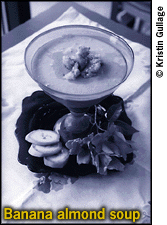 Banana, Honey, and Almond Soup1. In a large sauté pan over medium heat, melt the butter. Add the honey, almonds, and bananas, and cook for 1 to 2 minutes. Add the brown sugar, lemon juice, cinnamon, and salt. Stir until combined and remove the mixture from the heat.
(serves 6)3 tablespoons unsalted butter
3 tablespoons honey
2 cups almonds, toasted, skins removed, and coarsely chopped
4 ripe bananas
1/4 cup dark brown sugar
juice from 1/2 lemon
1/4 teaspoon ground cinnamon
1/4 teaspoon kosher or sea salt
1 quart light cream
dash of almond extract
4 or 5 crushed macaroons for garnish
2. Place the pan's contents in a blender with the light cream and almond extract. Blend on medium speed until smooth, about 45 seconds.
3. Chill in refrigerator until very cold. Serve in brightly colored soup bowls, with crushed macaroons for garnish.
Vegetable desserts
Sometimes it seems as though a pastry chef hasn't needed many tricks beyond warm chocolate pudding cake over the past 10 years. Amy Snyder of A Mano Catering, however, has played with anything and everything she could justify serving as dessert. Some of her most startling creations have come from vegetables -- and we're not talking carrot cake here.Not all of her experiments have been successful, she admits, but over the years Snyder has managed to work sweet potatoes, flowers, avocados, and cucumbers into her confections. This recipe for chocolate beet cake with orange beet coulis is one of her winners -- literally. It won a baking competition last year. Here, the beets lend moistness, while providing enough texture for a firm cake. And their earthy sweetness marries well with the smooth, bitter qualities of the chocolate. Though the cake itself is dark in complexion, the accompanying coulis showcases the brilliant garnet color of the beets.
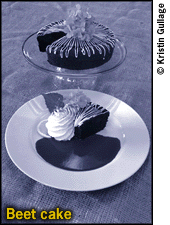 Chocolate Beet Cake with Orange Beet Coulis1. Preheat oven to 350deg. F.
(serves 10 -12)11/2 cups beets (about 1 bunch medium beets)
13/4 cups all-purpose flour
11/2 tablespoons baking soda
3 eggs
13/4 cups packed brown sugar
1 cup corn or soy oil
1/2 tablespoon salt
4 ounces unsweetened chocolate, melted
zest of one orange (optional)
4 ounces chopped semisweet chocolate
(optional)
1 ounce white chocolate, melted (optional)
unsweetened whipped cream
2. In a medium saucepan, boil the beets in enough water to cover. (The beets are done when they can be punctured easily with a fork, about 30 minutes.) Remove the beets from the boiling water and, under cool running water, slide the skins off. (They should fall off easily, and doing this under water will minimize staining.) Chop enough beets to make 11/2 cups. Put in a blender and process on medium speed until they're the texture of applesauce.
3. In a bowl, sift together the flour and the baking soda.
4. In a separate large bowl, beat the eggs and brown sugar together. Add the oil and salt and mix. Add unsweetened melted chocolate, pureed beets, and the flour/baking soda mixture. Add orange zest and semisweet chocolate, if desired. Mix well.
5. When the mixture is smooth, pour into an oiled and floured 9- or 10-inch tube pan. Bake for 1 hour, or until the cake springs back at a finger's touch. Remove from the oven and let cool.
6. Drizzle with melted white chocolate, if desired, and serve with unsweetened whipped cream and Orange Beet Coulis.
Orange Beet CoulisIn a medium saucepan, simmer the ingredients together for 15 minutes. Pour into a blender and mix over medium speed until very smooth.1 cup orange juice
zest of 1 orange
1 large beet, cooked, peeled, and diced
1/2 cup sugar
Flavored water
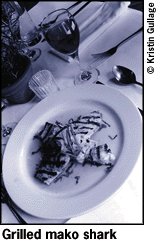
Let's admit it: water sauces just sound weird. Fussy, New Age, too high-tech for most home cooks. But to hear chef Charles Draghi of Marcuccio's, in the North End, using flavored water -- or, more accurately, colorless broth -- as a sauce is one of the easiest ways to add explosive and seemingly complex flavors to a simple dish.The only ingredient necessary in making a flavored water is a vegetable with a high water and sugar content. Tomatoes, sweet onions, and cucumbers are just a few examples. The moister the vegetable, the better. In this recipe, Draghi uses cucumbers: he finds their crisp taste reminiscent of (and complementary to) just-caught seafood. The presence of freshly chopped mint adds to the weave of cool tastes. This recipe requires planning -- you'll need to leave some ingredients in the fridge overnight -- but the result is a dish of pure and bright flavors, the freshness of the mako shark matched by the clean yet bold stylings of the minted-cucumber "water."
Charles Draghi's Grilled Mako Shark with Minted Cucumber Water1. Prepare charcoal or gas grill for cooking.
(serves 2)2 pounds cucumbers, peeled and seeded
pinch of salt
pinch of sugar
1 bunch mint, roughly chopped, with
a few whole leaves reserved for garnish
1 teaspoon fresh lemon juice
1 tablespoon olive oil
1/2 cup chopped herbs (parsley,
basil, tarragon, and mint)
2 mako shark steaks, 8 to 10 ounces each
mixed salad greens
freshly ground white pepper to taste
2. Shred the cucumbers on the medium edge of a grater and toss with the salt, sugar, and chopped mint. Place the mixture in a cheesecloth-lined strainer over a receptacle and refrigerate overnight. Lay a heavy pot on top of the cucumbers to help press out the water.
3. In the morning, there should be about 3 cups of liquid in the bottom container. Remove from the refrigerator, transfer to a medium saucepan, and reduce by half over medium-high heat. Season with salt and sugar to taste.
4. Meanwhile, in a shallow dish combine the lemon juice, olive oil, and chopped herbs. Marinate the steaks in this mixture for 10 to 15 minutes. Grill for 3 to 4 minutes on each side, or until done.
5. Arrange salad greens on a platter and place the fish on top. Pour minted cucumber water around fish, drizzle with lemon juice, and garnish with mint leaves.
Note: Mako shark steaks are readily available in the summer. Unlike all other species of shark, they have no ammonia in their skin and flesh to taint the flavor of the water.
Salty drinks
The idea of salting your drink may be anathema in America, but it is a part of everyday life in Central and Southeast Asia. Doh -- a sour, salty yogurt drink -- is the national drink of Afghanistan, while chanh muoi -- salty limeade -- is as common in Vietnam as lemonade on a late-July house-painting job.Stateside, most people just don't get it -- or at least they don't try it -- but in warmer climates, salt serves as an indispensable replenishing agent (think Gatorade). Doh combines ordinary light, refreshing ingredients (club soda, mint, and lemon juice) with some odd ones (yogurt whey, salt) to form an intriguing drink. It's an acquired taste, so try it a few times before giving up on it. Chanh muoi, though billed as "salty" on the menu at Pho Pasteur, actually draws that particular taste component from the pickled lime juice it employs. If this all still sounds strange, just ask: could two countries' worth of perennially hot and thirsty people be wrong?
Afghan Doh (adapted from Stephen Raichlen's The Barbecue Bible)In a tall glass, combine the yogurt whey, club soda, lemon juice, mint, and salt. Stir well, correcting the seasoning as desired. Add ice and serve.
(serves 1)1/2 cup yogurt whey or plain whole-milk yogurt
1/2 cup club soda
1 tablespoon fresh lemon juice, or more to taste
1 teaspoon dried mint or 1 tablespoon fresh mint, finely minced
1/2 teaspoon salt, or more to taste
Note: To make 1/2 cup of yogurt whey, line a strainer with cheesecloth or a coffee filter. Pour in 1 cup plain yogurt and place over a receptacle. Refrigerate and allow to drain for several hours. (What remains in the strainer is yogurt cheese. This can be used much like ricotta.)
Pho Pasteur's Chanh MuoiIn a tall glass, mix the pickled lime juice and sugar until sugar is completely dissolved. Stir in the water and add ice. Serve with a slice of fresh lime.
(serves 1)
Juice of 1/2 pickled lime
11/2 tablespoons sugar
8 ounces water
fresh lime wedge for garnish
Note: Pickled limes are readily available in Asian markets or, as Pho Pasteur's manager says, "anywhere in Chinatown."

Fried ice cream
Nothing, it seems, is safe from frying these days. First it was pretty much just potatoes and chicken. Then, slowly, the entire vegetable world succumbed. Soon enough, innocent old dough fell. In Jamaica Plain, Jake's Boss BBQ actually fries whole turkeys. But the most unbelievable item to hit the frying pan has to be ice cream. Traditionally served at Southwestern or Tex-Mex restaurants, but in the same vein as boardwalk treats like fried dough or Asian sweets such as fried banana won tons, fried ice cream not only works in the mouth, it's easy to put together in the kitchen. This rendition is courtesy of Brown Sugar Café, a Thai restaurant in the Fenway. Chef Suraphong Pinyochon suggests serving it simply, topped with honey, caramel, or chocolate sauce, or even sprinkled with sesame seeds.
Brown Sugar's Fried Ice Cream1. Place one piece of bread on a flat surface. Put one large scoop of ice cream in the middle. Sprinkle half the brown sugar over the ice cream. Place a second slice of bread on top and wrap both slices tightly around the ice cream. The ball should be completely covered with bread and should look like an undersize baseball. Repeat process. Wrap each coated ice-cream ball separately in aluminum foil and freeze until extremely hard, about 5 hours.
(serves 2)4 slices white bread, crusts cut off
1 pint vanilla ice cream
1 teaspoon brown sugar
aluminum foil
vegetable oil for deep frying
2. Heat the oil to 450deg. F in a deep pan or deep fryer. (If you don't have a thermometer, test the readiness of the oil by dropping in a small piece of white bread. If it sizzles and turns golden brown, the oil is hot enough.) The oil should be deep enough to cover the ice-cream balls. Remove balls from freezer, unwrap, and fry them for no more than a few seconds. The coating should take on a light crispness. Drain the balls briefly on paper towels after removing.
3. Garnish as desired and serve immediately.
Rob McKeown a freelance food, arts, and travel writer, thinks all food makes sense.
Copyright © 1998 The Phoenix Media/Communications Group. All rights reserved.
